New
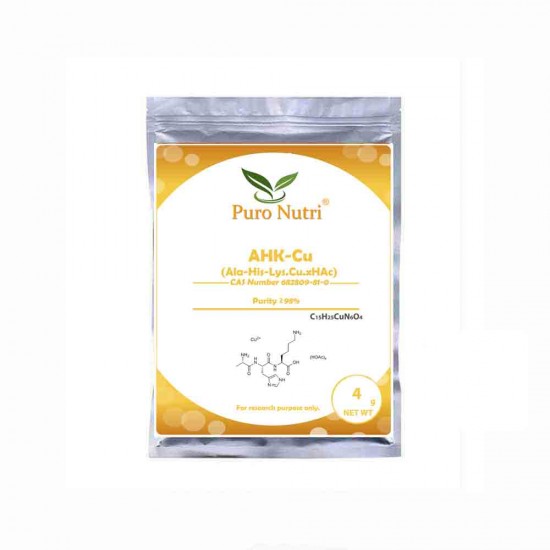
Wholesale AHK-Cu Copper Peptide Scalp Hair Growth Support Lyophilized Copper Tripeptide-3 Hair Follicle Research Compound
- Stock: In Stock
- Model: AHK-Cu
- SKU: 682809-81-0
190 samples sold
Product Views: 196
$83.22
Ex Tax: $83.22
Available Options
Product Name: AHK Cu
Other name: Copper tripeptide-3/AHK CU/Tricomin/AHK Copper
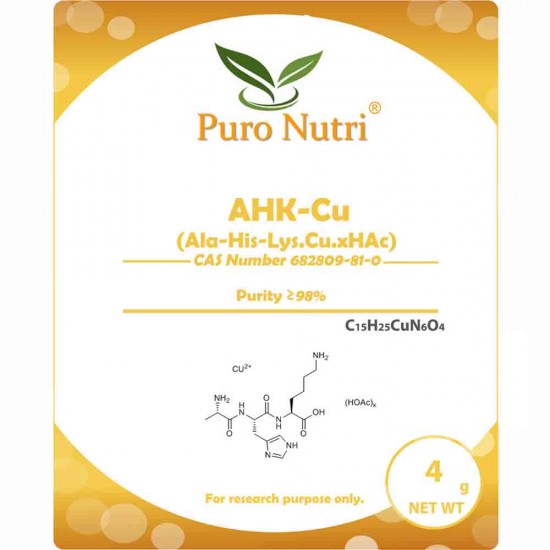
INCI Name: AHK Cu
Cas No: 682809-81-0
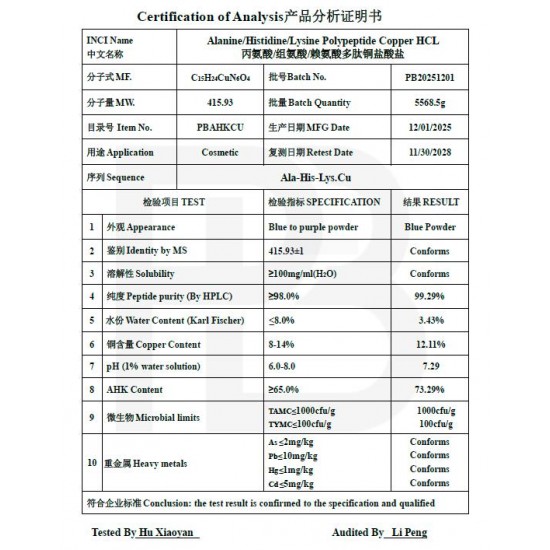
Molecular Formula: C30H50N12O8Cu
Molecular Weight: 770.34
Sequence: (Ala-His-Lys)2·Cu
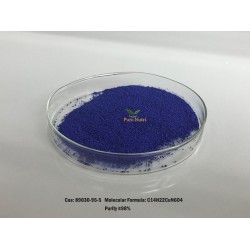
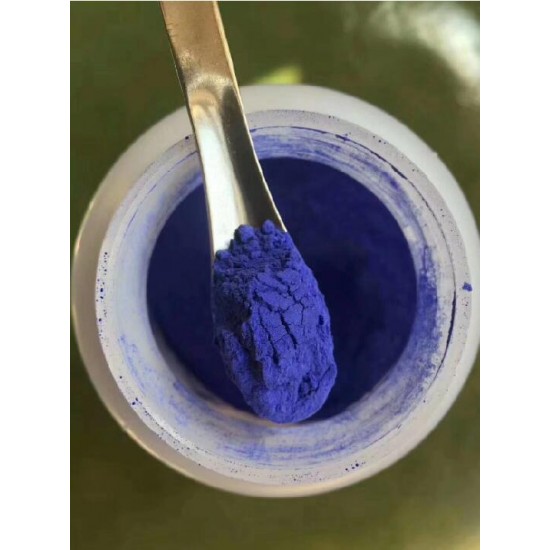
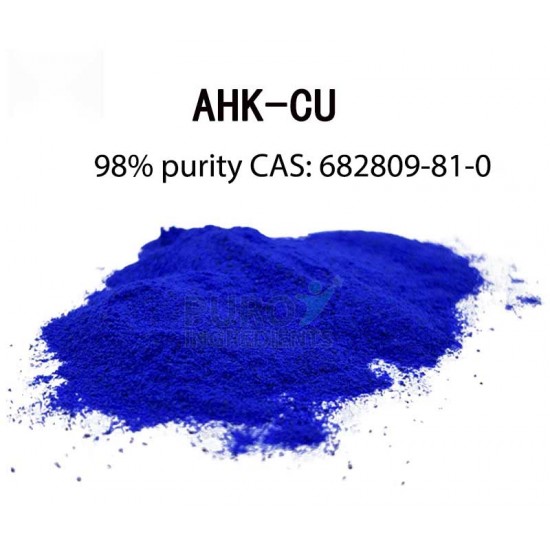
Appearance: Blue powder
Purity: 99.0%
Solubility: soluble in water
Stability: stable
Source: synthetic
Odor: slightly
AHK-Cu a renowned copper peptide plays a pivotal role in various biomedical and cosmetic domains driving healing and regenerative processes Explore the diverse applications of AHK-Cu through the lens of high perplexity and burstiness:
Wound Healing: With its capacity to stimulate growth factors and boost cellular proliferation AHK-Cu emerges as a potent force in promoting wound healing By mitigating inflammation and expediting tissue repair this peptide finds its way into wound dressings and topical treatments revolutionizing recovery timelines
Anti-Aging Skincare: Delving into the realm of anti-aging skincare AHK-Cu takes center stage with its ability to ignite collagen and elastin synthesis The result? Enhanced skin elasticity diminished fine lines and wrinkles all under the protective shield of its antioxidant prowess Witness a skincare revolution where AHK-Cu stands as a beacon of youthful radiance.
Hair Growth Promotion: Unveiling its prowess in hair care AHK-Cu strides forward to invigorate hair growth and combat hair loss By amplifying hair follicle size and elongating the anagen phase of hair growth this peptide transforms shampoos conditioners and serums into hair density champions nurturing scalp health with every application.
Anti-Inflammatory Applications: The anti-inflammatory charisma of AHK-Cu illuminates the path to soothing a spectrum of inflamed skin conditions From pacifying irritated skin to reducing redness and swelling its impact reverberates across afflictions like eczema psoriasis and dermatitis offering a balm of relief to troubled skin.
AHK-Cu (Copper Tripeptide–Alanine-Histidine-Lysine-Copper) supports scalp circulation, density & skin repair. AHK-Cu Copper Peptide is a specialized copper-binding peptide that has attracted research interest in scalp and hair follicle-related studies.
AHK-Cu, also known as Copper Tripeptide-3 (Ala-His-Lys.Cu.xHAc), is an analogue of GHK-Cu. Research shows it performs better than GHK-Cu when it comes to supporting hair growth. Both copper peptides work for skin & hair, but AHK-Cu was specifically chosen for its stronger results in hair care.
AHK-Cu is a tripeptide containing a copper atom.it is a short peptide in which the copper atom is attached between the histidine and alanine residues of the alanine-histidine-lysine tripeptide.The copper atom is linked to three nitrogen atoms in this molecule.
AHK-Cu studies have primarily examined the peptide's potential in the areas of hairfolicle and skin cell esearch.AHK-Cu primaily exhibits potential within fibroblasts.These cells are considered to function in maintaining and growing the Extraceltular Matrix (Ecw).which surrounds cells.
AHK-CU AND HAIR FOLLICLES
AHK-Cu may possibly influence follicle stimulation via two potential mechanisms. The first hypothesized mechanism is via the
stimulation and secretion of the VEGF, lecding to the growth of blood vessels in the area surrounding the hair follicles.These blood vessels supply nutrition to hairfolicles and may promote growth. A reduction in the supply of these nutrients,on the other hand, may lead to folicle loss and damage.Studies have suggested that AHK-Cu may also lead to the formation of new hair follicles by promoting new blood vessels and improving blood supply to existing hair follicles.By stimulating the growth of blood vessels, AHK-Cu may potentially infuence growth.The second mechanism by which AHK-Cu may potentially mitigate hairloss via down-regulating Transforming Growth Factor beta.This action may reduce the effect of dihvdrotestosterone (DHT)on loss.